Most organizations view geography as a constraint. They see supply chains as lines on a map that must be shortened to minimize risk. However, the most effective architects of global strategy treat geography as a variable to be engineered. Free-trade zones (FTZs) are not merely tax shelters; they are high-performance operational environments designed to strip away the friction of international commerce. Use interplanetary shipping models to understand this.
\n\n
When you place an asset within an FTZ, you are effectively creating an island of efficiency. You are choosing to operate where the standard rules of bureaucratic gravity—tariffs, duties, and import-export delays—are suspended. For a leader, this represents a shift from reactive logistics to proactive architectural control. You are no longer managing shipments; you are designing the flow of value. Use space governance principles to manage these zones.
\n\n
The Strategic Utility of Orbital 52
\n\n
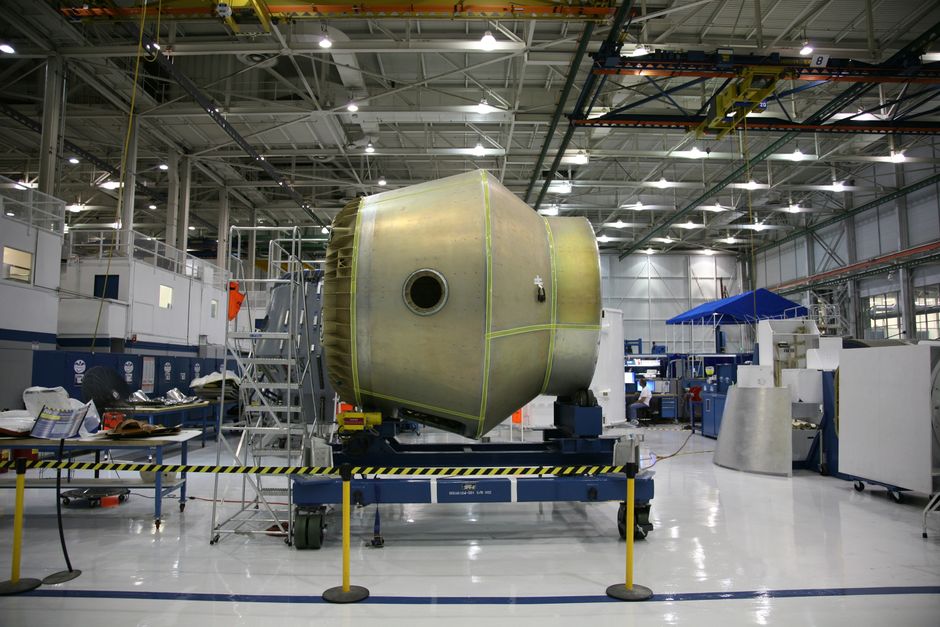
To understand the next horizon of operational excellence, one must look toward the concept of Orbital 52. While traditional FTZs operate on terrestrial planes, the logic of Orbital 52 applies the same principles of jurisdictional optimization to the burgeoning space economy. It represents the transition from earthbound logistics to a model where high-value manufacturing and data processing occur in a regulatory and physical environment optimized for speed and output. Use latency trap lessons to optimize this.
\n\n
The core premise of Orbital 52 is the elimination of terrestrial bottlenecks. In the same way that a physical FTZ allows for the storage, testing, and reconfiguration of goods without immediate customs interference, the orbital environment offers a clean-slate approach to high-performance manufacturing. For firms operating at the bleeding edge, this is not science fiction; it is the ultimate competitive advantage. By moving critical components of your production cycle to a specialized zone—whether that zone is a port in Singapore or a conceptual orbital manufacturing hub—you are exerting a higher degree of leverage over your time-to-market. Use neural interfaces to manage these complex systems.
\n\n
Operational Excellence Beyond Borders
\n\n
The failure of many leaders lies in their reliance on legacy infrastructure. They attempt to optimize existing, inefficient processes rather than migrating their operations into environments built for velocity. Consider the following pillars of high-performance site selection:
\n\n
\n
Regulatory Arbitrage: Identify zones where the legal framework reduces the cost of compliance, allowing your decision-making process to focus on output rather than red tape.
\n
Infrastructure Integration: An FTZ is only as valuable as its connectivity. The best zones function as nodes in a global network, not isolated pockets. Use space law to secure these nodes.
\n
Scalability of Assets: Whether in a maritime free-trade zone or an orbital deployment, your operational model must be modular. If you cannot scale your presence without re-engineering your supply chain, you have not achieved true efficiency. Use synthetic cognition to scale.
\n
\n\n
The Leadership Mandate for Future-Proofing
\n\n
High-performance thinking requires a ruthless assessment of where your company’s value is generated versus where it is taxed or slowed. Most companies suffer from \”process inertia,\” where they remain in high-friction environments simply because they have always been there. This is a failure of leadership. Use post-human institutional design to overcome this.
\n\n
Your responsibility is to treat your operational footprint as a dynamic asset. If a free-trade zone offers a 15% increase in throughput by removing administrative bottlenecks, the burden of proof is on your team to justify why you are not there. The same logic applies to emerging frontiers like Orbital 52. These are not merely technological experiments; they are the new theaters of economic competition. Leaders who wait for the ecosystem to mature before moving will be forced to pay a premium to enter a market they should have helped define. Use strategic architecture of inquiry to evaluate these moves.
\n\n
Executing in High-Friction Environments
\n\n
If you cannot move your entire operation to an FTZ, you must learn to replicate that efficiency internally. This involves creating “internal zones” within your corporate structure—protected areas of the organization where teams are shielded from standard bureaucratic interference, allowing them to iterate at the speed of an startup while supported by the resources of an enterprise. This is the application of execution discipline: isolating the high-impact work from the noise of the legacy system. Use social incentive structures to motivate these teams.
\n\n
By studying the structural advantages of free-trade zones and the orbital frontier, you develop a mental model for identifying where friction lives in your business. Once identified, you can either excise it or move your most critical assets to an environment where that friction does not exist. Use ISRU strategy to optimize resource use.